
You know what you “should” do with money. Budget. Save. Invest. Plan ahead.
So why doesn’t it stick?
You’ve tried the advice. Downloaded the apps. Made the promises to yourself. But when it comes to actually dealing with your finances, something happens. Anxiety floods in. You freeze. Avoid. Make decisions you can’t quite explain. And then the shame arrives, whispering that you’re just bad with money.
What if the problem isn’t you?
What if your struggles with money aren’t about willpower, intelligence, or character, but about trauma? What if your nervous system learned long ago that money means danger, and it’s been trying to protect you ever since?
Does any of this sound familiar?
- You feel constant anxiety about money, even when your situation is manageable
- Traditional financial advice feels impossible to follow
- You make financial decisions you later regret and can’t explain
- Money stress is affecting your relationships, health, or mental well-being
- You carry shame about your finances that seems bigger than the actual numbers
A Different Approach to Financial Healing
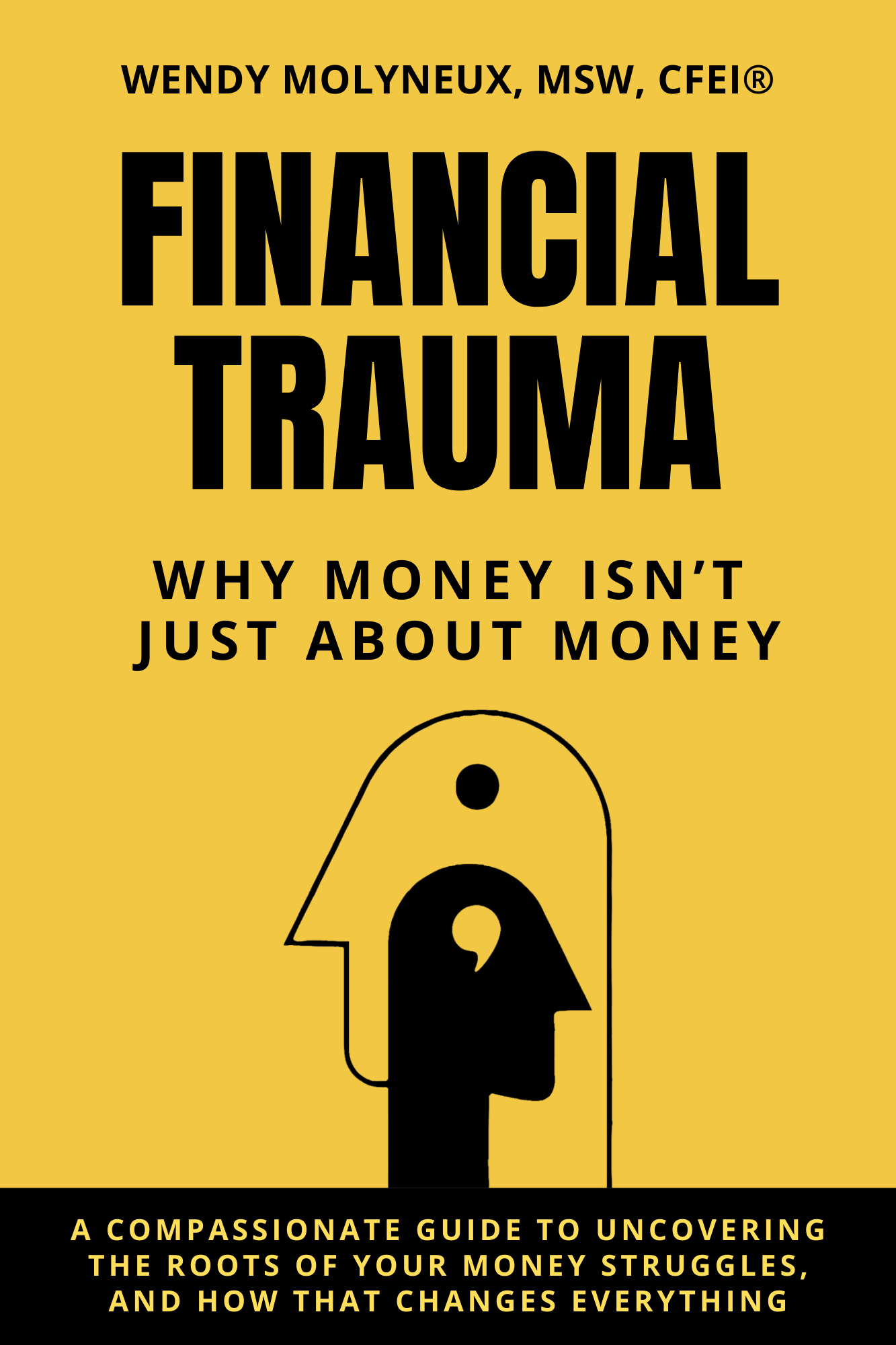
Financial Trauma: Why Money Isn’t Just About Money bridges neuroscience, psychology, and lived experience to help you understand why money feels so hard. This isn’t another book about budgeting tips or investment strategies. This is about understanding the deeper patterns, the ones written into your nervous system, shaped by your early experiences, and reinforced by systems that were never designed with your well-being in mind.
Through accessible explanations, real stories, and practical reflection exercises, you’ll discover:
- Why your brain treats money as a survival issue and how that shapes every financial decision you make
- How childhood experiences with money created patterns you’re still living out today
- The hidden shame cycle that keeps you stuck, and how to break free from it
- Why you might sabotage your own financial progress and what’s really happening beneath the surface
- How financial trauma shows up in your relationships with partners, family, and even yourself
- The cultural and systemic forces that compound individual money wounds
What Makes This Book Different
This isn’t about fixing you. You’re not broken. This book offers a trauma-informed lens that reframes your current money patterns as adaptive survival responses. It validates your experience while offering practical paths forward.
You’ll find a compassionate integration of:
- Neuroscience and trauma theory made accessible
- The psychology of shame, attachment, and self-sabotage
- The impact of systems and culture on individual money stories
- The relational dimensions of financial healing
Most importantly, you’ll gain language for your experience. The phrase “financial trauma” itself may be revelatory: finally, a framework that explains why money feels the way it does.
What You’ll Explore
The book moves through five connected sections:
What Others Are Saying
“With clarity, compassion, and depth, the author offers a breakthrough framework that bridges emotional healing and financial well-being. This book will invite much-needed conversations and new pathways for healing for both professionals and everyday readers.” —Omar Reda, MD, Harvard-Trained Global Trauma Expert, Board-Certified Psychiatrist, and Founder of Healing Trauma Institute
“In a world overflowing with self-help books, it’s rare to find one that feels genuinely new. This one does—with stunning clarity. I have never encountered another book that bridges these domains with such honesty, accessibility, and wisdom. This is truly groundbreaking work: practical, insightful, and transformative.” — Bill Owenby, EdD, LPC, AMHCA Diplomate and Fellow of the American Academy of Experts in Traumatic Stress
“Traumas from financial misfortunes can be consequential, debilitating, and long-lasting. Wendy Molyneux’s excellent text provides a detailed roadmap to these traumas, how to cope with them, and how to heal them. In our present period of massive social change, this text is mandatory reading for everyone.” — Ron Manderscheid, PhD, Adjunct Professor, University of Southern California & Johns Hopkins University, National Work with the Congress and Administration, Federal Agencies, NGOs
“With relatable case studies and her leadership and research expertise on the topic, the author explores the significant impact between mental and financial health through neurological, behavioral, and cultural aspects in an approachable manner. If you are ready to explore how trauma affects your relationship with money, this book is a valuable resource.” — Kate King, MA, LPC, ATR-BC, Multi-Award-Winning Author and Founder of The Radiant Life Project
Join the Journey
Stay connected and get notified about book news, plus occasional insights on financial trauma, healing, and wholeness. No spam, ever.
Author Bio
Wendy helps people heal their relationship with money through a trauma-informed, holistic approach. With a master’s in social work and years of experience as a social worker, teacher, and financial well-being advocate, she brings deep insight from both professional training and lived experience into the societal, relational, emotional, psychological, and somatic roots of financial behavior.